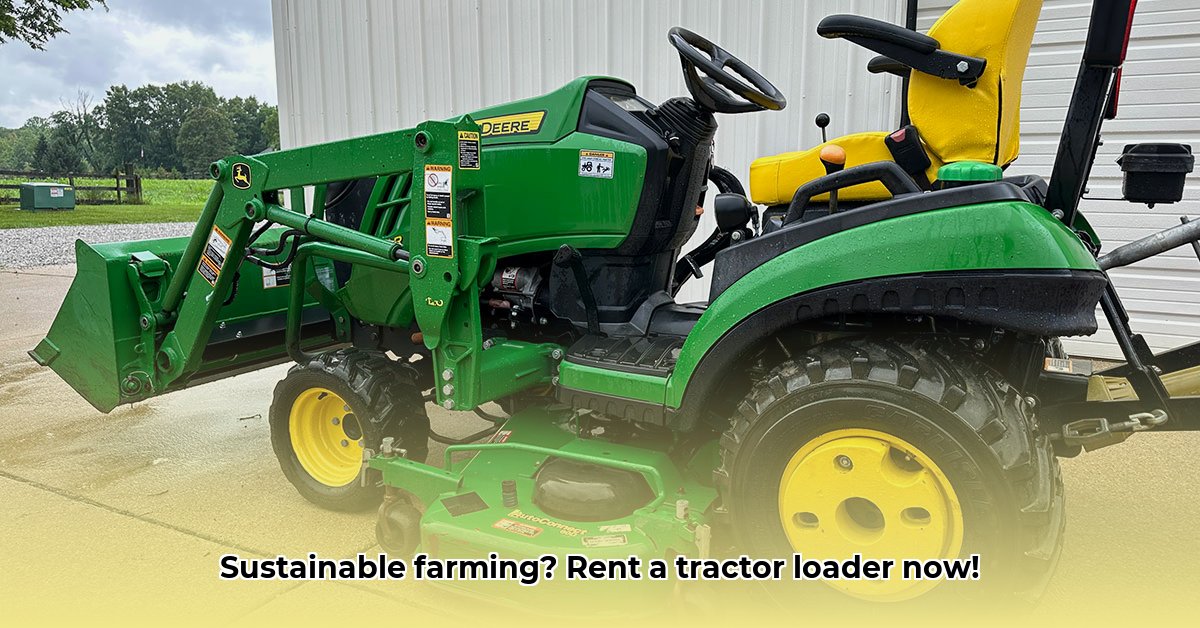
Choosing the Right Tractor Loader for Your Sustainable Farm
Selecting the right tractor loader is crucial for efficient and sustainable farming. The wrong choice can lead to wasted resources and reduced productivity. Consider these key factors:
Farm Size: For smaller farms (under 5 acres), a smaller, lower horsepower tractor (20-40 HP) might suffice for light hauling and smaller tasks. Larger farms (over 20 acres) will benefit from higher horsepower tractors (75+ HP) capable of handling heavier loads and larger implements. Those in between (5-20 acres) should target 40-75 HP.
Specific Tasks: Will you primarily use the loader for material handling, or will you need a power take-off (PTO) (a device that transfers power from the tractor's engine to attachments) for tasks like tilling or mowing? This determines whether you need a tractor designed for loader operations or one better suited for three-point hitch attachments.
Horsepower (HP): This metric indicates the tractor's power output. Higher horsepower translates to handling heavier loads and working on tougher terrain. It's essentially the tractor's "muscle." Consider the weight of the materials you will be moving and the type of soil you will be working with.
Lifting Capacity: Critically examine the loader's maximum lifting capacity, expressed in pounds (lbs). This is directly tied to the weight of the materials you’ll be moving. Insufficient lifting capacity could compromise safety and efficiency.
Three-Point Hitch: Many tractors also feature a three-point hitch, a system for mounting rear implements like plows or harrows. If you intend to use such implements, confirm the tractor's compatibility.
Think of it like choosing a vehicle: A compact car is suitable for city driving, but you'd need an SUV or truck for heavy hauling. Similarly, your tractor's size and capabilities must match your farm's needs. Do you need a workhorse for heavy lifting, or a more nimble machine for precise tasks?
For more information on tractor attachments, check out this helpful resource: Tractor Attachments List.
Here's a simplified comparison chart:
| Tractor Size (HP) | Lifting Capacity (lbs) | Suitable Tasks |
|---|---|---|
| 25-40 | 1000-2000 | Light hauling, pallet handling, small tasks |
| 40-60 | 2000-3500 | Moderate hauling, fieldwork |
| 60+ | 3500+ | Heavy hauling, large-scale operations |
Finding and Vetting Your Tractor Loader Rental Provider
Finding a reputable provider is crucial. Your options include:
Online Marketplaces: Websites and apps dedicated to equipment rentals offer broad selection and price comparison capabilities. Read reviews carefully to gauge the reliability of both the provider and the equipment. This is like shopping online for your ideal tractor. Don’t forget to check their sustainability credentials; does their business prioritize eco-friendly practices? A data-backed rhetorical question: Are online marketplaces always the most efficient way to find local equipment rentals? The answer, often, is no.
Local Rental Companies: Local companies offer personalized advice and are often familiar with local conditions and regulations. This personalized attention can be invaluable, especially for those new to tractor loaders or sustainable farming. Many are deeply invested in the success of their local farming communities; they're often knowledgeable about local soil conditions and practices.
Farm Equipment Dealers: Dealers who sell equipment often rent as well, offering the added benefit of technical expertise and potential post-rental support. This is ideal for complex equipment or situations where experienced support is crucial. This approach reduces uncertainties by incorporating local expertise.
Critical Considerations: Regardless of your chosen provider, confirm these:
Insurance Coverage: Ensure adequate insurance protects against accidents or damages. A lack of insurance can lead to significant out-of-pocket expenses.
Maintenance Procedures: A well-maintained tractor minimizes downtime and ensures safe operation. Ask about their maintenance schedules and processes.
Customer Service: A responsive provider ensures timely support in case of issues.
Understanding the Rental Agreement: Protecting Your Interests
Before signing, meticulously review the rental agreement. Pay close attention to:
Rental Duration: Clearly defined start and end dates prevent misunderstandings.
Insurance and Liability: Understand the insurance details and your responsibilities in case of incidents or equipment damage. This is a crucial point to avoid unexpected financial burdens.
Maintenance: Identify who is responsible for maintenance or repairs during the rental period. This prevents disputes and clarifies expectations.
Fuel Costs: Specify who covers fuel expenses to avoid unexpected costs. This is a cost factor often overlooked, but crucial for budget planning.
Damage Liability: Explicitly understand the charges for any damage to the equipment during your rental term. Clear descriptions prevent later conflicts.
Operating and Maintaining Your Rented Tractor Loader Safely
Prioritize safety! Always consult the operator’s manual before operation.
Pre-Operation Inspection: Before each use, check fluid levels, tire pressure, and the tractor's overall condition. This simple routine check can prevent accidents and equipment failure.
Safe Operation: Operate the tractor at a safe speed for conditions and remain aware of surroundings. Avoid overloading the loader; this is a frequent cause of accidents and equipment damage.
Routine Maintenance: Adhere to the provider's maintenance schedule for optimal performance and longevity. Regular maintenance is an investment in the equipment's performance and reduces the likelihood of breakdowns.
Sustainable Farming Practices with Your Rented Tractor Loader
Using a rented tractor offers opportunities for sustainable farming:
Precision Farming: GPS-guided technology minimizes fuel consumption and soil compaction. This is a significant step toward more environmentally friendly operations.
Reduced Tillage: Adopt no-till or reduced-till methods to conserve soil moisture and reduce erosion. This approach significantly improves soil health.
Efficient Crop Management: Optimize the transport of crops to minimize fuel waste and emissions. Efficient planning and operation minimize environmental impact.
Cover Cropping: Use the loader to plant and manage cover crops, enhancing soil health and nutrient cycling. This improves overall sustainability.
Budgeting for Your Tractor Loader Rental: A Cost Breakdown
Consider these cost elements:
Rental Rate: Rates vary depending on tractor size, horsepower, and rental duration (hourly, daily, weekly).
Fuel Expenses: Fuel costs are influenced by prices and usage. Proper planning can significantly affect this cost factor.
Maintenance: Budget for potential maintenance and/or repair costs, if applicable.
Insurance Premiums: Remember to factor in insurance costs, if not included in the rental agreement.
Transportation: If you arrange transport, include fuel or towing costs in your budget.
Conclusion: Harnessing the Power of Rental for Sustainable Growth
Renting a tractor loader offers flexibility and cost-effectiveness for farmers of all sizes. Careful planning, safety precautions, and attention to sustainability best practices will ensure a productive and environmentally responsible farming experience. This approach encourages cost-effective and environmentally conscious farming techniques. Remember, preparation is paramount.